DERBYSHIRE STONE TOUR - STANTON MOOR
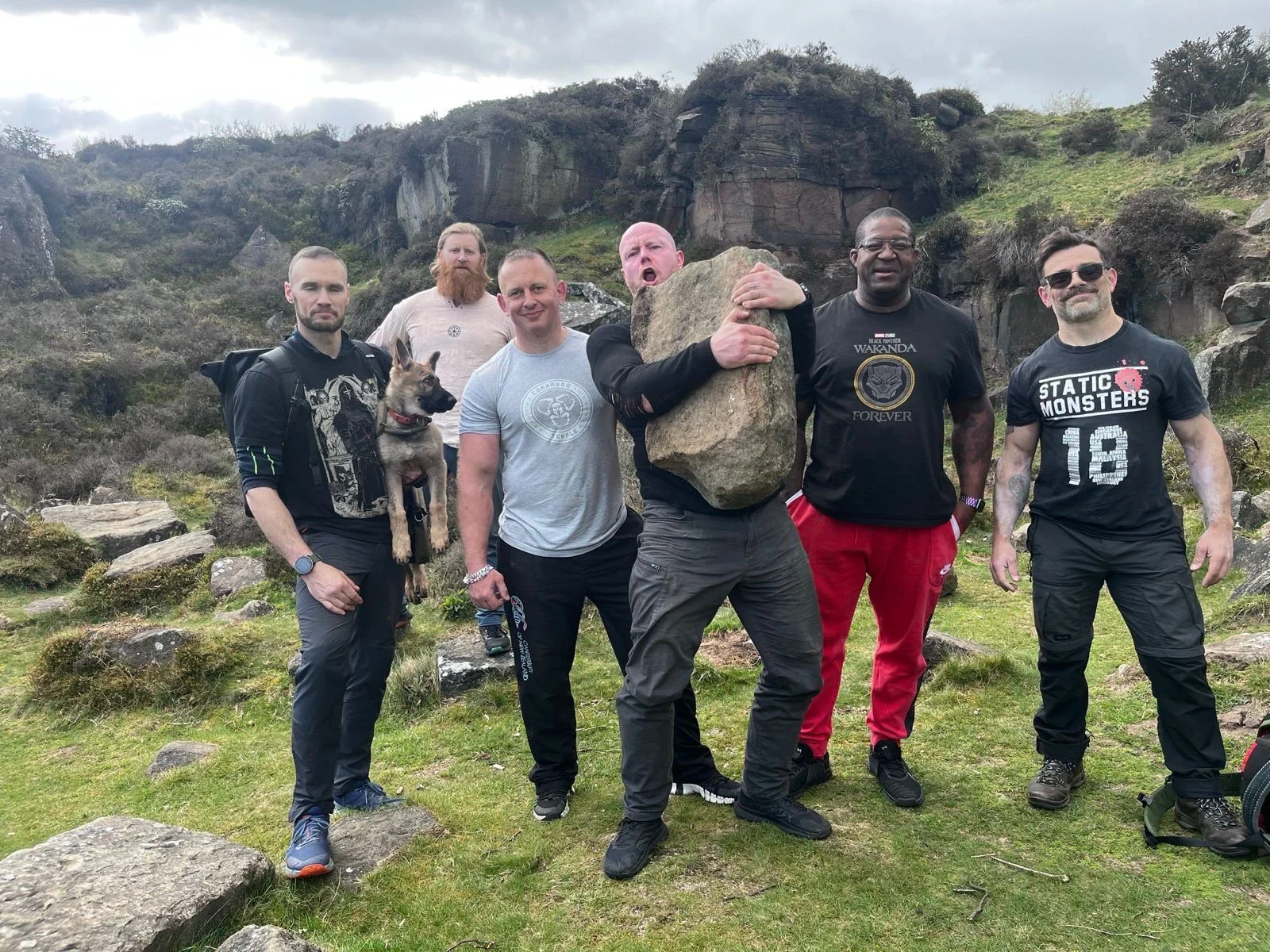
Stanton Moor in Derbyshire is one of Englands most unique natural stone lifting locations, featuring historic gritstone challenges scattered across the Peak District landscape. Our group travelled from London to take on iconic lifts including the Stanton Stone, Grey Lady Stone, Beltane Stone, Raven’s Head Stone, and the Peak District Dinnie Stones challenge.
There’s something special about travelling across the country just to pick up stones.
Five of us made the journey north from London to Derbyshire for a day on Stanton Moor — a place steeped in history, gritstone, and old-school strength. What should have been a fairly straightforward train journey turned into a long and arduous trek thanks to cancellations and delays, but eventually we rolled into Matlock to meet Rob, the owner of The Commando Temple, tired but buzzing to get moving.
Having organised the trip, yet having never actually set foot on the moor, its always tricky to manage times and ensure that the visit is memorable. I put in the prep, had my maps and images of the stones we would be attempting to lift.
We had three hours on the moor. Seven stones. Then one final challenge in Matlock.
Exactly the kind of day you remember.
Stanton Moor has a sort of pilgrimage feel to it. There’s a walking circuit through the landscape where every five or ten minutes you come across another test piece tucked away. No polished gym floors. No calibrated plates. Just gritstone and gravity.
We opened on the Little Stanton Stone — 62kg to overhead.
A perfect warm-up stone. Light enough to move fast, heavy enough to demand respect. Pressing a natural stone overhead requires a bit of everything: positioning, tension, balance, coordination. The Derbyshire gritstone is incredibly coarse too. Fantastic for grip, brutal on the skin. Charlie managed to cut his chin on the stone early on, which felt like a fitting introduction to the day. The stone gives you purchase, but your hands definitely pay for it.
From there we moved onto the Stanton Stone — 141kg to chest.
This is where natural stone lifting becomes interesting. At that sort of weight, the challenge isn’t just strength. You’ve never touched the stone before. You don’t know where the “handles” are. Every lifter has to spend a moment reading it, feeling for balance points, figuring out how their body can move this awkward object.
What was cool was how differently everyone approached it. Different body types, different strengths, different lifting styles. Some attacked it low, others hugged it high. Some rowed it in, others lapped and adjusted. But everyone got movement on it quickly, and seeing seven different solutions to the same problem is one of the best parts of stone lifting.
Next came the Grey Lady Stone — 103kg to shoulder.
Another really enjoyable lift. Shoulder stones always feel slightly more dangerous than chest loads because of the coarse surface and unpredictable movement. You become very aware of keeping your ears and face out of the way while trying to guide this lump of rock onto your shoulder. Again, loads of different pickup styles emerged, and by this point everyone was starting to settle into the rhythm of the moor.
Then came the monster sitting by the roadside: the TOOTH STONE - 207kg.
Long. Thin. Unbalanced. Awkward in every possible way.
Honestly, getting it upright from the floor was almost harder than the actual pull. The shape makes it feel alive when it starts moving. Once upright though, there’s a sweet spot. Find the grips, tip the pelvis forward slightly, let the stone pivot, and suddenly it starts to make sense. You’re not trying to deadlift it to lockout — you only need inches. Enough space to get “wind underneath it,” so to speak.
Absolutely savage on the hands, but strangely manageable once you cracked the puzzle.
The Pilgrim Stone was one of the coolest shapes of the day - 135kg to chest
Shaped vaguely like an elephant’s foot, and constantly shifting as you lifted it. Unpredictable, awkward, and incredibly satisfying. We all managed it confidently, rowing it into the chest and standing tall with it. It actually felt like an ideal progression stone for someone moving into bigger natural stone lifting.
After the heavier loading work came something faster paced:
the Beltane Stone - 59kg to shoulder for 9 reps under 99 seconds.
Simple. Brutal. Effective.
Charlie absolutely tore through it in 46 seconds, with Morgan close behind on 53. The lungs started burning properly here. After hours of heavy lifting and walking, this lighter challenge suddenly felt vicious in a completely different way. Conditioning through stone lifting hits differently — awkward objects don’t let you settle into efficient movement.
Then came my favourite challenge of the day:
the Raven’s Head Stone - 93kg carried around a Bronze Age stone circle for roughly 40–50 metres.
This one just felt right. The setting, the carry, the atmosphere — everything came together perfectly. By this point fatigue had fully settled into the body, so the carry hit harder than expected, but everyone completed a full circuit around the stones. There was something deeply satisfying about carrying weight through a place that has seen thousands of years of human movement and ritual.
It felt timeless.
We finished the day at Matlock Farm Park with the
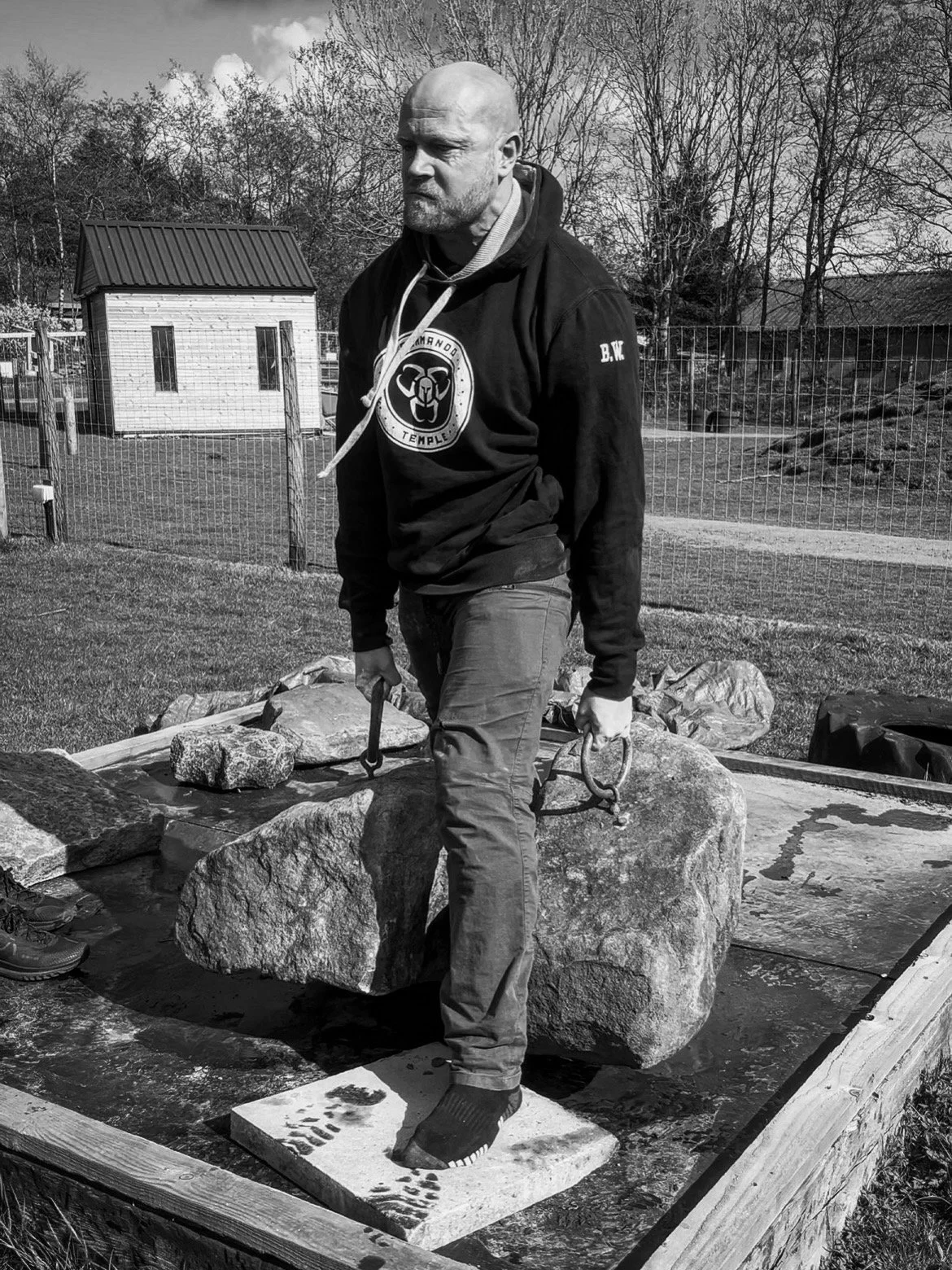
Peak District DinnIE Stones — ring-handled stones inspired by the legendary Scottish challenge. 163kg in one hand.189kg in the other.
An entirely different kind of suffering.
Iron rings cut into the hands, the pull drags you out of position instantly, and every kilo feels amplified by the awkward leverage. Myself, Oli and Rob managed to get successful lifts and be one of the handful of people that have done so. So damn heavy and on a slick rubber floor. Very difficult after a hard day lifting.
By the end of the day, everyone was battered, filthy, and grinning.
That’s the thing about these trips.
You remember the weights, but mostly you remember the atmosphere. The problem solving. The conversations between lifts. The walks through the moor. The shared suffering. The ancient feeling of testing yourself against natural stone.
No machines. No mirrors. No perfect conditions.
Just people, landscape, and strength.
I coach one-to-one clients at the Commando Temple in Deptford. You can find out more about personal training with me HERE